
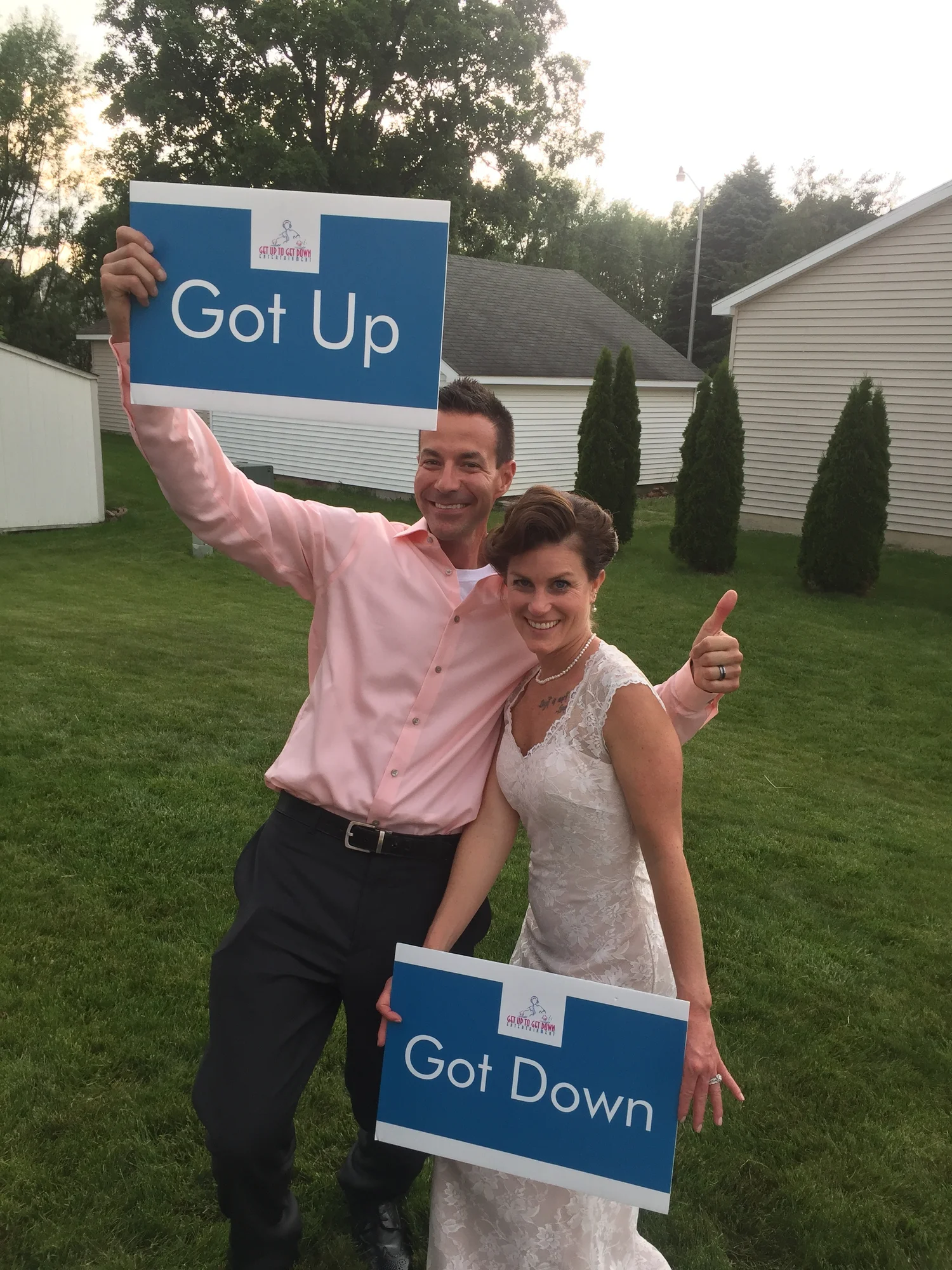
An outdoor wedding celebration from our archive. Confirm the ceremony sound plan for your own setting.
Your vows can be quiet, funny, emotional, or all three in the same sentence. The people you invited should have a chance to hear them.
Ceremony audio deserves its own planning conversation. Start with who needs to be heard, where guests will sit, and who will operate the sound. Then connect that plan with your music, officiant, venue, and videographer.
Use this checklist whether you are planning indoors or outdoors in Fort Wayne or elsewhere in Northeast Indiana. Your venue and audio provider should confirm the setup for your specific space.
1. Name the person responsible for ceremony sound
Confirm who supplies the equipment, who sets it up, who tests it, and who operates it throughout the ceremony. Ask what is included in the written quote.
Do not assume that reception entertainment automatically covers ceremony sound, a separate location, or a live musician's needs. Explain the full plan and ask for the relevant coverage to be documented.
If your ceremony and reception are in different spaces, ask whether separate setups are needed and how the transition will work.
2. List every voice and instrument
Include the officiant, both people exchanging vows, readers, and any musicians. Note where each person will stand and whether they need their hands free.
Ask your audio provider how each voice will reach the guests. A microphone chosen for the officiant does not automatically establish a complete plan for the couple's vows or a reading elsewhere in the space.
Have the officiant and any readers practice with the planned microphone before guests arrive. Ask the sound operator to explain placement and handling in plain language.
3. Walk through the space with sound in mind
Share the seating layout, aisle location, ceremony position, available power, and vendor access time. Discuss where equipment and cables can go without blocking guest routes or important photographs.
Ask for a sound check from the seating area, including the back row. Microphone and speaker placement affect feedback, so positioning should be assessed as a complete setup. Shure's explanation of feedback control describes why placement and system settings matter together.
The goal is clear speech where people are listening. Simply asking for more volume does not answer every audio problem.
4. Make an outdoor plan and a weather plan
For an outdoor ceremony, discuss wind protection for microphones, equipment protection, and what happens if the ceremony moves. Appropriate windscreens can reduce wind noise; their design and suitability matter. Shure's guide to minimizing wind noise explains the principle.
Confirm who makes the weather decision, when it must be made, and whether the backup location needs different equipment or additional setup time. Your venue and service providers should establish the practical limits for your event.
5. Write down music cues precisely
A song title alone leaves room for confusion. Specify the artist, version, start point, and the person whose movement triggers the cue.
Create one short sequence covering guest arrival music, processional entrances, any music during the ceremony, and the recessional. Identify who gives the sound operator the signal to begin.
If you want an entrance timed to a particular musical moment, discuss the actual walking distance and pace. Rehearse the cue if practical. Confirm how the operator will handle a pause or an entrance that takes longer than expected.
6. Connect live sound with your wedding film
Ask your videographer how vows and readings will be recorded. Confirm whether they need an audio feed, their own microphones, or coordination with the ceremony sound provider.
Treat live amplification and recording as two jobs that need a shared plan. If you are exploring wedding videography, discuss the voices and moments you most want to hear again.
7. Confirm the final checks
Before the wedding, ask who checks microphone batteries, music playback, signal coverage, and backup options. Agree on when sound checks must finish so guest arrival feels calm.
Keep one final ceremony outline with your wedding team. Pair it with the reception plan so music and communication carry through the day. Learn about our wedding DJ and MC services, then tell us how your ceremony and reception will connect.
Share your date, venue, and ceremony plans so our team can discuss the options. Submitting an inquiry does not reserve your date.